ProductDataOps · Hong Kong · 2025 — Present
Rosetta data decoder
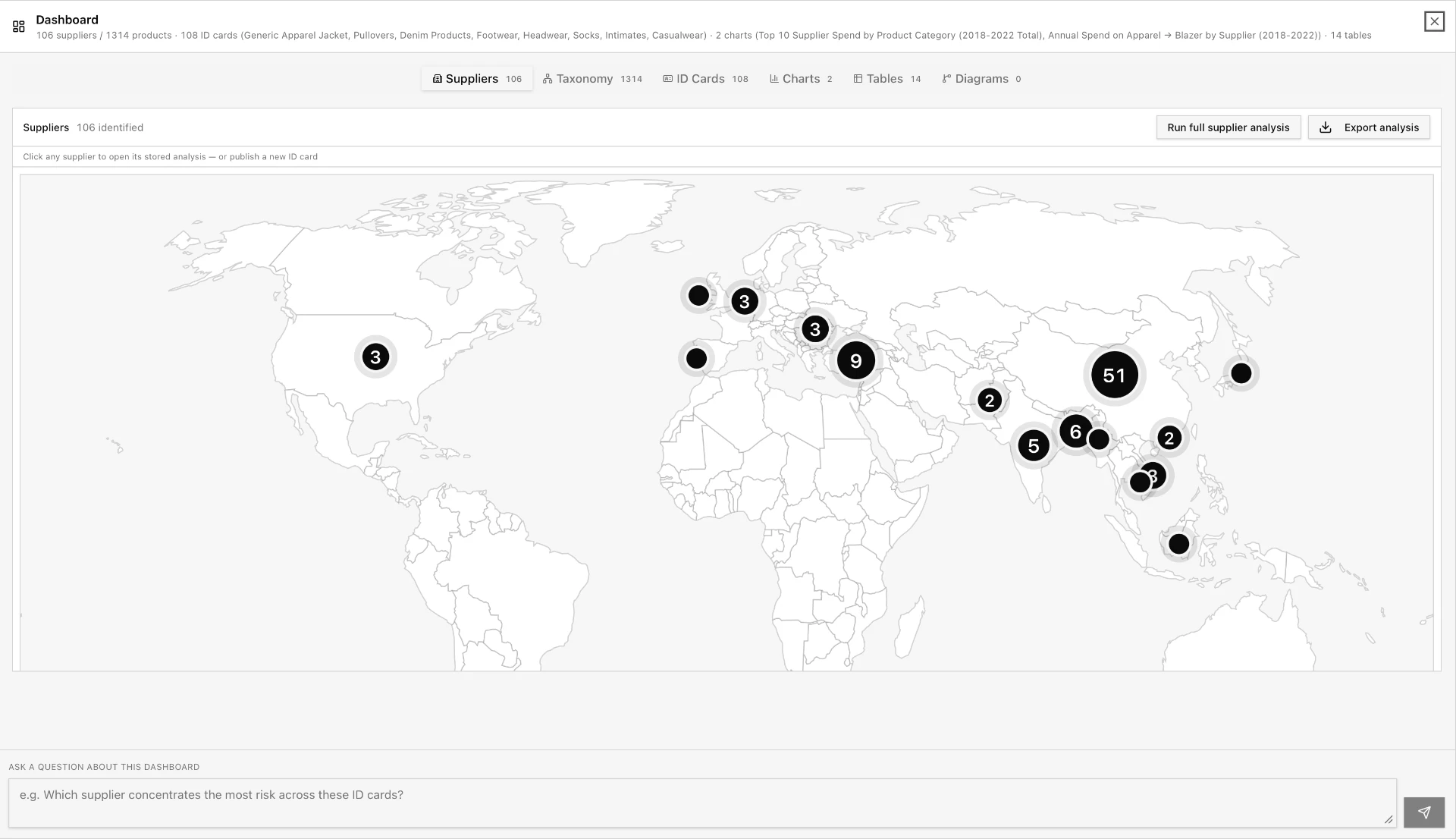
Built a focused data-decoding workflow that turns fragmented product and supplier information into structured, source-linked evidence.
Context
Product and supplier information is often fragmented across documents, spreadsheets and systems, slowing decisions across commerce and supply chain.
Intervention
- Owned product vision, semantic data architecture and workflow design.
- Ran positioning and early market validation with design partners.
Outcome
- Concept to working product and validated demand signal.
Rosetta — the decoder layer
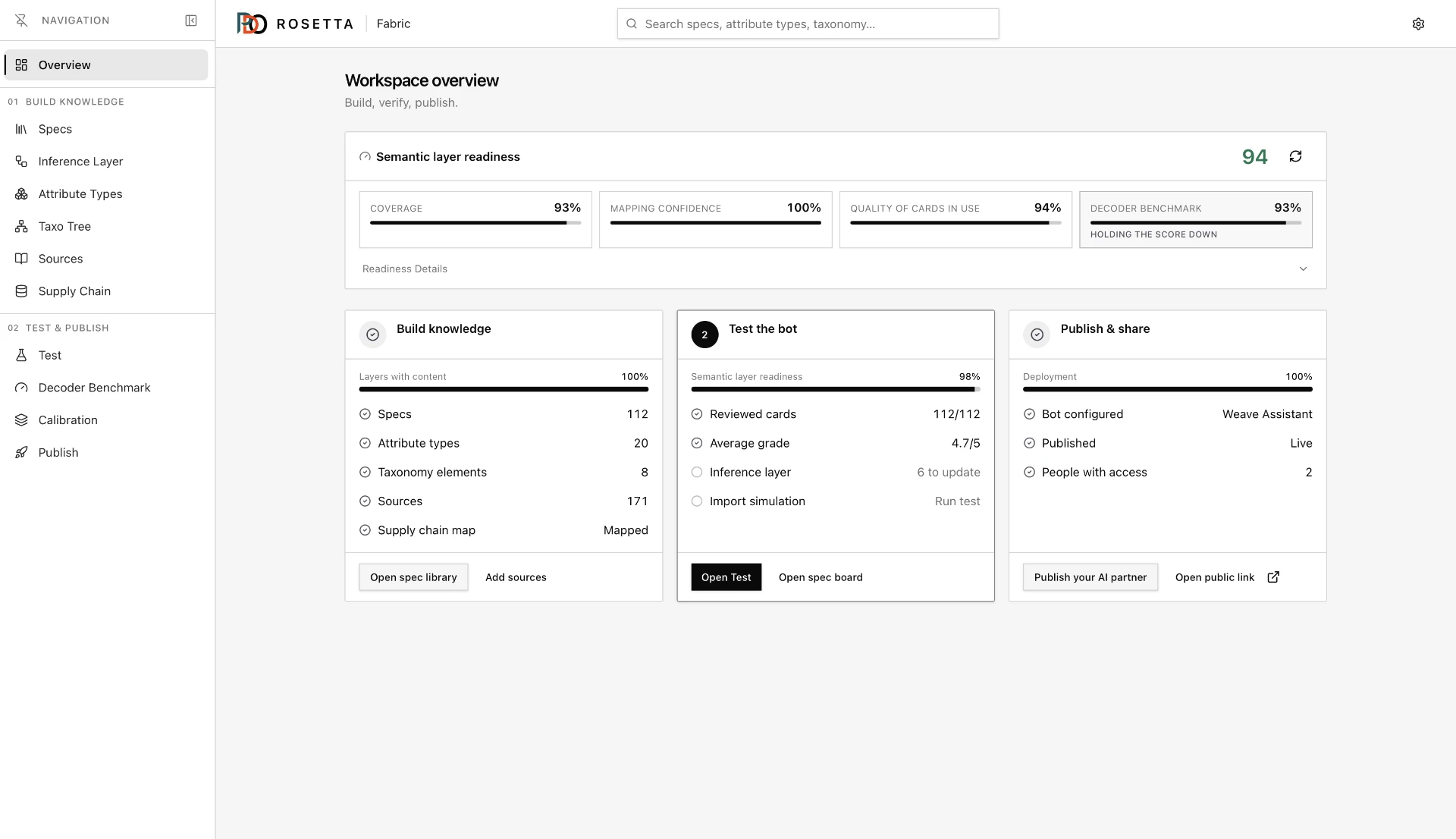
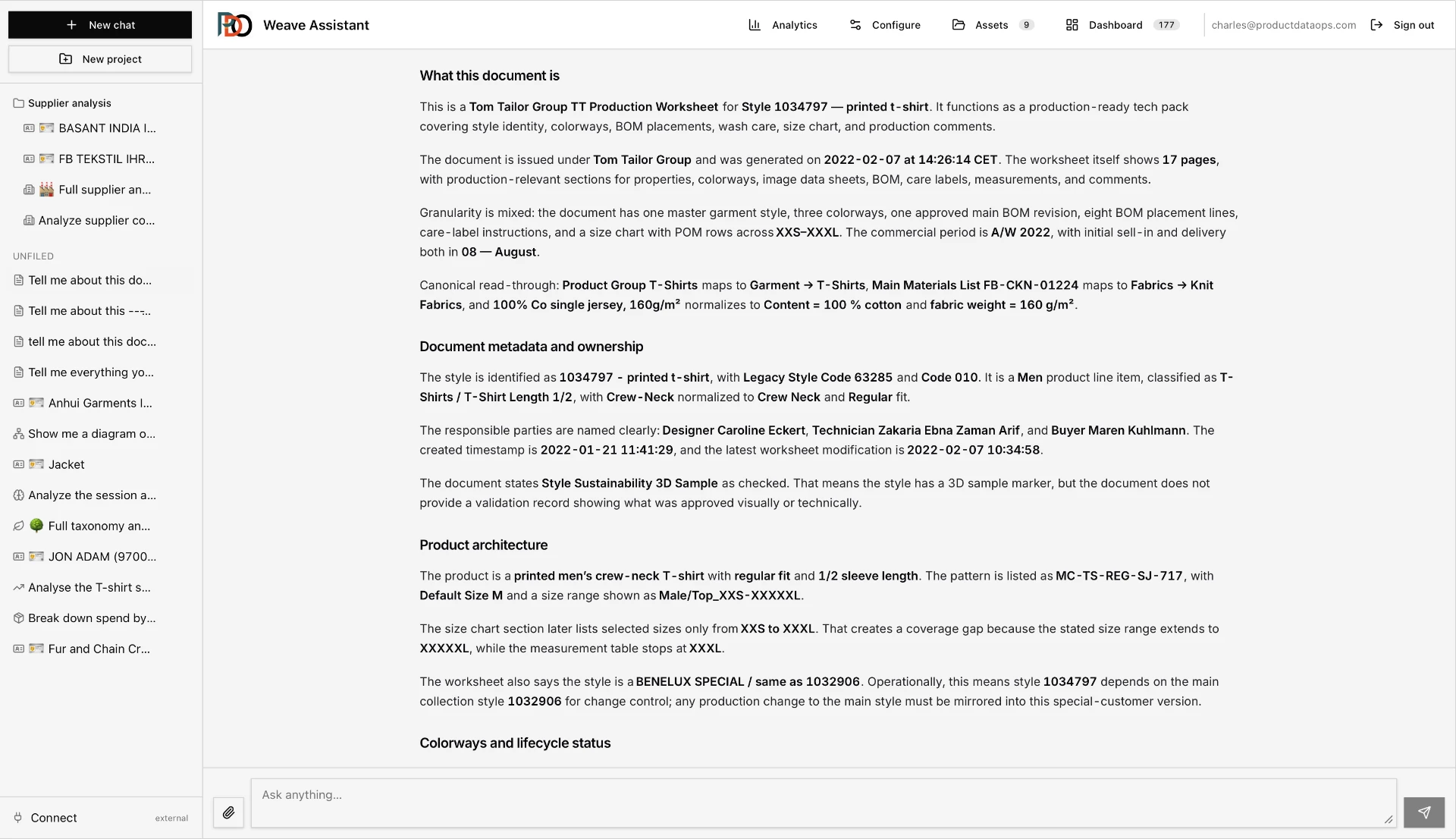
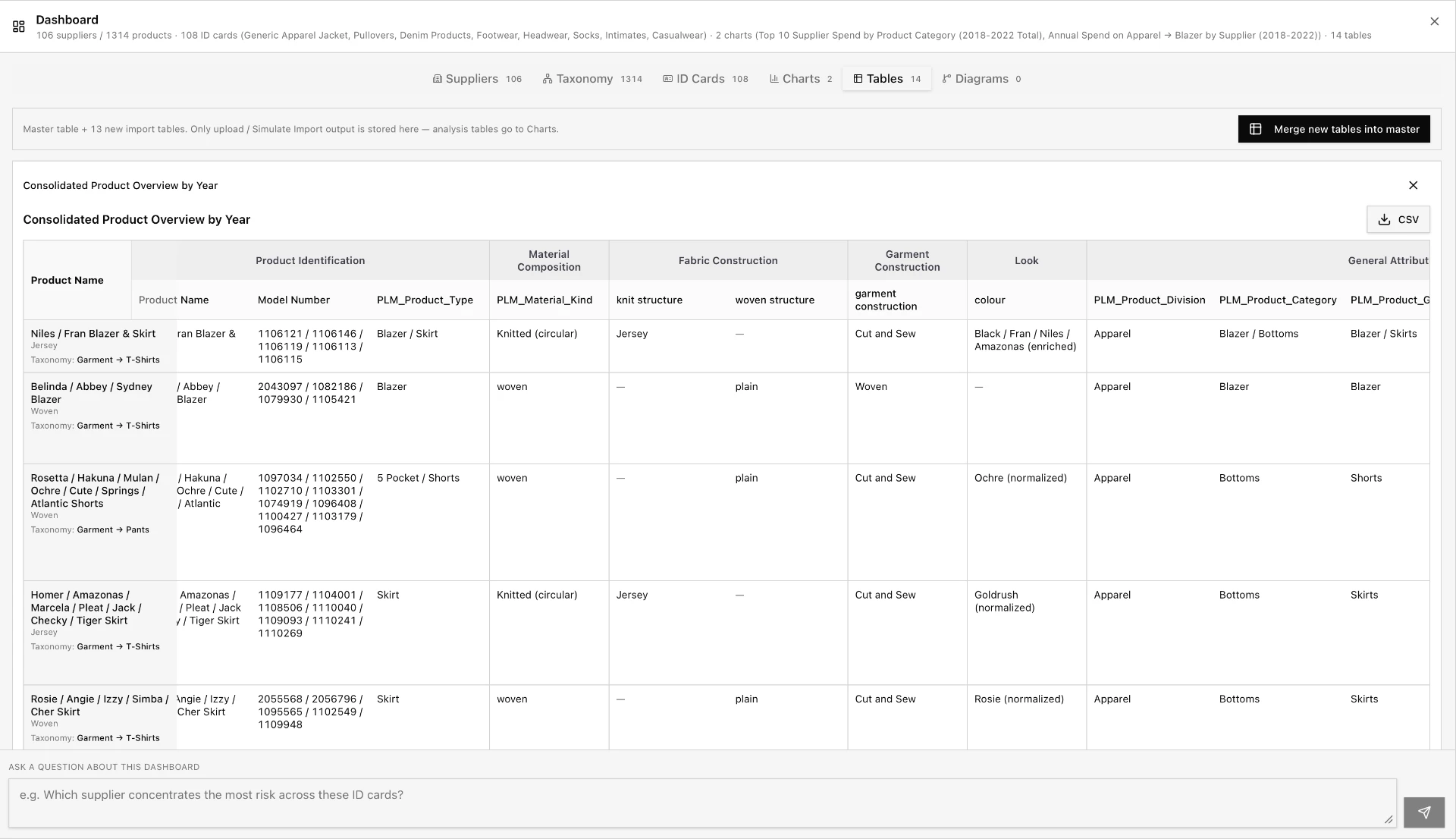
Supply chains run on product data, yet most of it still arrives as spreadsheets, ERP exports, supplier PDFs and portal dumps that people clean by hand. Rosetta is a thin decoder layer: it reads whatever format arrives and turns it into the structures a business already trusts — matrices, specs, attribute types, taxonomies and supply-chain maps. It sits on top of existing systems rather than replacing them.
Raw AI can read a document. It cannot decide what a field means, which unit is acceptable, or when a value should be rejected. That judgement is what the layer adds — and every new dataset makes the next one easier to use.
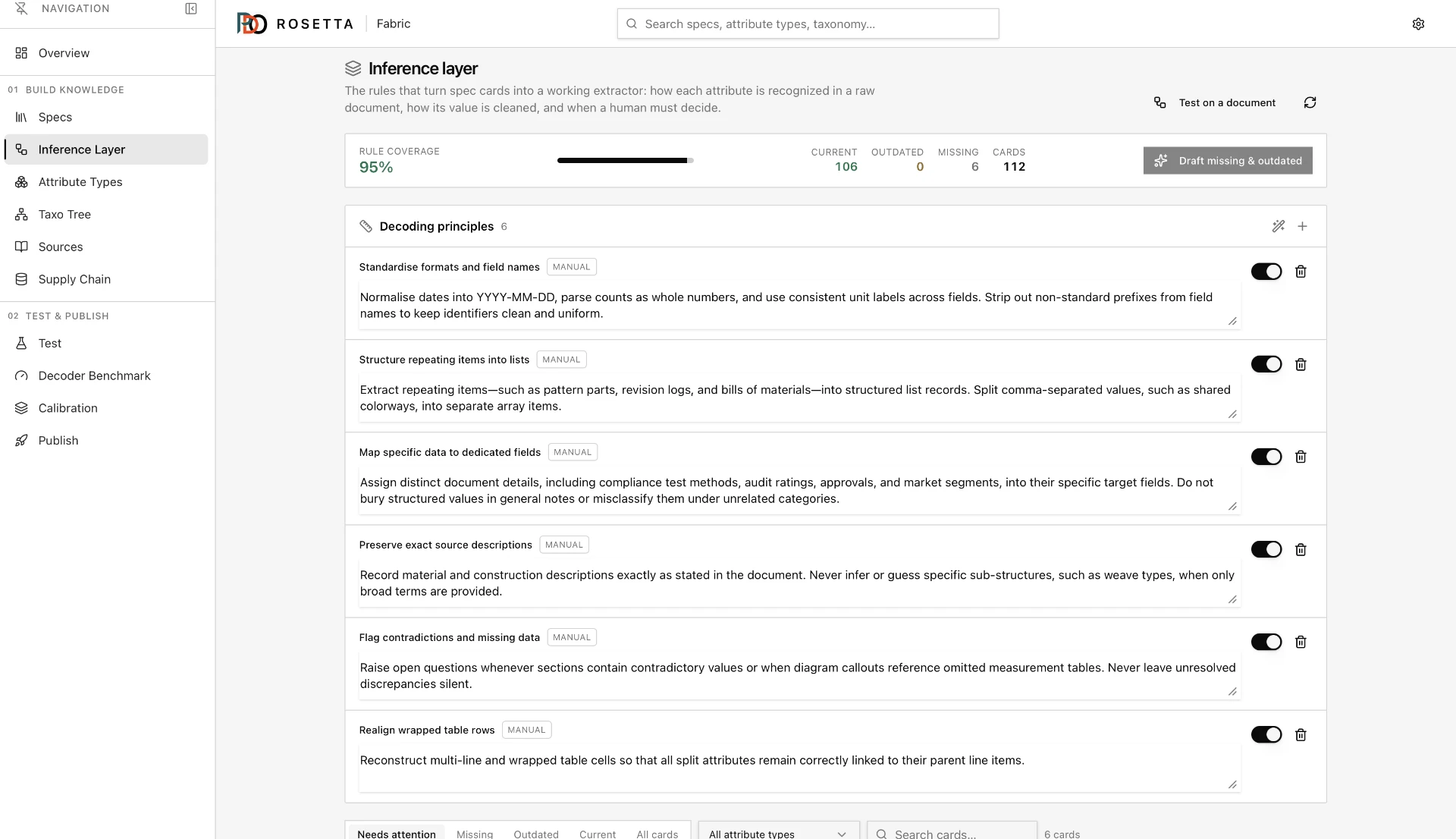
Canonical naming
Every supplier names the same spec differently. Each variant maps to one canonical field, so attributes stay comparable across suppliers and documents.
Unit and format normalisation
Values are rewritten to a single standard — g/m², cm, % — so every column can be compared, sorted and reused whatever the source wrote.
Controlled values and taxonomy
Finishes, compositions and constructions snap to an approved value list and land in the right attribute type and taxonomy branch, not free text.
Rule-based exception flagging
When a value breaks a defined rule — out of range, ambiguous, contradictory — it is flagged for review instead of passing through silently.
The pattern behind the work
From fragmented decisions to a scalable system
This work addressed a common transformation challenge: turn fragmented demand, data and local decisions into a scalable system with clearer trade-offs, stronger evidence and repeatable outcomes.
See the practice behind this approach: ProductDataOps →founder · semantic data · 0→1